
The wipes market: resilient, maturing and still growing
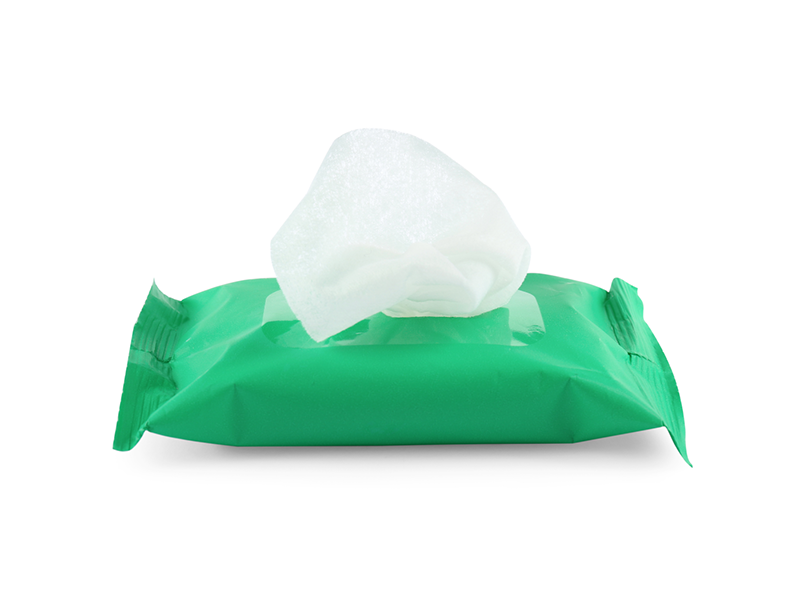
Despite geopolitical disruption, inflation, high energy costs and strained supply chains, the global wipes market continues to outperform the wider economy. Consumers, institutions and industries treat wipes as an everyday essential that saves time and money, and that has kept demand resilient even as purchasing power tightens. Nonwovens for wipes are worth $26.0 billion in 2026 and are forecast to reach $35.7 billion by 2031. In this article, we examine where demand is coming from, how it differs by region, and which regulatory and product trends will shape the industry over the next decade.
A market doing better than expected
The wipes market is maturing, yet it continues to defy the economic climate. Global demand is still growing at two to three times GDP, and even the weakest-performing markets keep pace with that. That puts wipes well ahead of the global economy and most other industries.
Why wipes hold up in a challenged economy
Rather than the industry adapting to geopolitical disruption, consumers have adapted to it, and wipes have stayed in their baskets. Most consumers see wipes as a necessity, while institutions and industries value them for the cost and time savings they deliver.
With inflation, high energy costs, disrupted supply chains and elevated transport costs squeezing budgets, products that save time and money keep their appeal. The drivers behind the market’s original success are still in place, and that largely explains its continued strength.
Price plays a part too. A pack of wipes is a small purchase compared with a car or a house, so consumers who deliberate over big-ticket spending see wipes as an affordable, established convenience. Even categories that might be considered luxuries are holding up: moist toilet tissue is performing very strongly, and disinfecting wipes are doing better than in the past. Wipes occupy a niche that consumers want and that institutions and industries value.
How the market differs by region
Regional differences come down to who uses each type of wipe. Demographics have dominated industry discussion over the past year, and with good reason. Ten years ago, the market was driven by the very large baby wipes segment, particularly in emerging markets, where high growth and large populations of under-fives sustained demand.
That picture has changed completely. Over the past decade, China has moved from a one-child policy to encouraging families to have more than two children. Outside Africa, mainly sub-Saharan Africa, no region has a growing baby and infant population. Everywhere else, including Asia, that population is flat or shrinking.
The shift is most advanced in North America and Western Europe, where baby wipes have steadily lost share in line with falling birth rates. Specialty wipes have filled the gap, with moist toilet tissue, disinfecting wipes and electrostatic wipes all growing in these slower markets. Asia still has a large infant population, so baby wipes there are growing faster and account for a larger share of the market.
The key regional divide: mature markets use more specialty wipes, while emerging and under-penetrated markets, including parts of Asia, are still driven by baby wipes.
Europe’s regulations and the push for plastic-free wipes
Europe is currently the slowest-growing wipes market, but regulation is not the reason. In fact, its forward-looking rules make Europe the global driver of many developments in wipes and nonwovens.
The EU Single-Use Plastics Directive was the first genuine sustainability regulation to capture the industry’s attention and compel producers and end users to act. Before it, sustainability was a vague term. Most companies published a sustainability report and claimed to make greener products, but much of this amounted to greenwashing, built on statements and favourably presented figures. The directive’s influence has since spread worldwide, making it one of the biggest mandates affecting wipes. Europe is now developing similar packaging regulation, again well ahead of other regions.
Plastic-free is effectively a global mandate, even where regulation is lighter than Europe’s. Each region has its own driver. In North America it is retailers and consumers; in Asia, producers are exporting to regulated markets such as Europe, or to North American retailers that demand plastic-free products.
Plastic-free is set to be the industry’s leading product development priority for at least the next five years, and potentially ten or more. It all stems from a single regulation that was more detailed and specific than any before it.
Flushability: moving towards a common standard
Flushable wipes are not new. Consumer demand drove growth from the early 2000s, when most products were ‘flushable by size’: small enough to pass through household plumbing without causing a blockage, but little more.
In 2015 and 2016, Trützschler and Andritz each introduced off-the-shelf process lines for hydroentangled wetlaid material. This moved products from flushable by size, or only partly dispersible, to highly dispersible wipes that could credibly be called flushable. Concerns remained, however. INDA and EDANA had published flushability guidelines, but wastewater organisations did not fully support them, the US saw considerable litigation, and complaints were widespread globally. The industry has kept improving flushability ever since.
Now the interested parties are converging. Consumers, wastewater groups, and nonwovens and wipes producers are working towards a jointly agreed flushability standard, and they are increasingly aligned on what a wipe must achieve before it can be labelled flushable.
That alignment is lifting product quality and consumer appeal, and prices have fallen on many products that were relatively expensive ten years ago. Flushable wipes may look like a luxury, but consumers treat them as a necessity: even when economies weaken and purchasing power falls, they continue to perform very well worldwide.
The outlook: decades of opportunity
The past few decades have been a highly favourable period for the wipes industry. Like any mature market, the wipes sector is slowing with age, but it has not reached the final stages of its growth. Decades of attractive opportunity likely lie ahead.
The Future of Global Wipes to 2031 gives you the market sizes, forecasts and strategic insight you need to stay ahead. Written by Phillip Mango, who brings more than 45 years of nonwovens industry experience, it covers all nonwoven wipes by type, process, material, end use and geography, and examines how plastic-free legislation, flushability guidelines and growth in Asia will reshape the market.