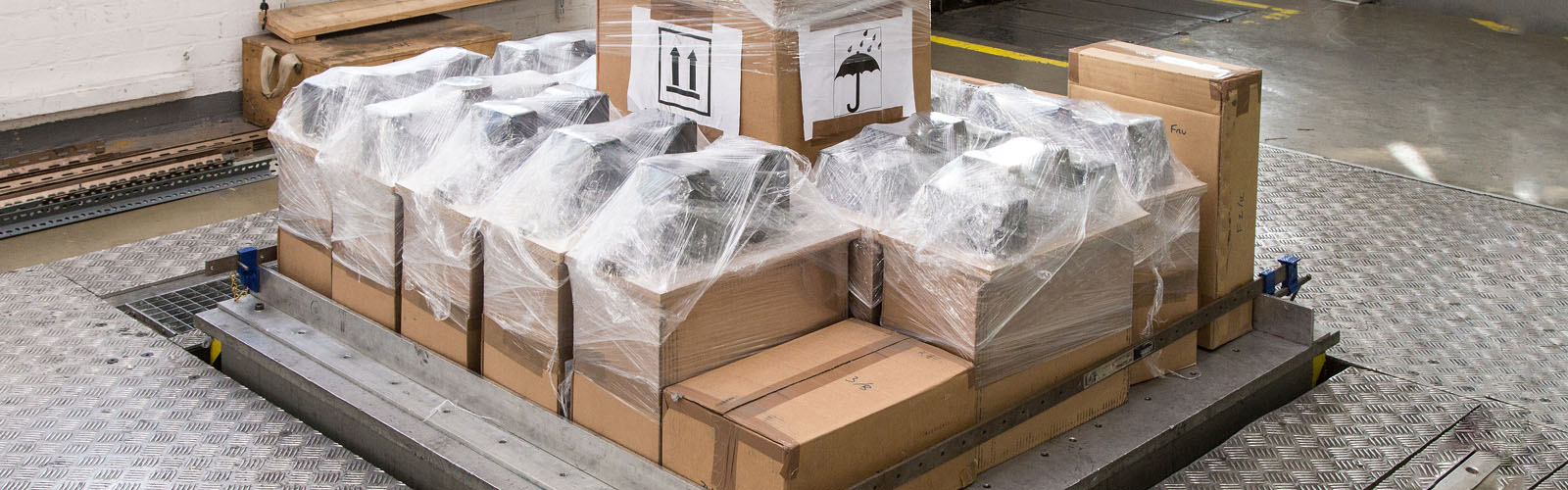
Whether it be routine validation testing or one-off technical investigation, using the correct test method or protocol is key to running a successful assessment and delivering the right conclusions for decision making or regulatory compliance.
Using an established test standard
Established distribution test standards provide repeatable methods for evaluating the performance of packaged products and are appropriate for many validation and compliance requirements.
Smithers has extensive experience selecting and applying internationally recognised methods across industries including healthcare, retail and e-commerce. These include:
- ISTA standard procedures
- ASTM D4169, ASTM D7386 and associated ASTM standards
- ISO, CEN and BSI standards and methods
- DEF STAN and MIL-STD
- UN requirements for dangerous goods and hazardous materials.
Smithers specialists are actively involved in organisations responsible for developing packaging and distribution test methods, including ISTA, CEN and ISO.
Our laboratories are ISTA certified and accredited to ISO 17025.
Developing a focused test simulation
Standard test procedures are designed to represent a broad range of distribution conditions. For some products and supply chains, however, a more focused laboratory simulation can provide a better representation of the specific hazards involved.
Smithers develops tailored distribution test protocols around the product, packaging and supply chain, incorporating relevant vibration, shock, compression and climatic hazards.
Protocol development may involve field data recording, but can also be completed through desk-based review of the distribution environment and available data. Individual test elements such as drop, vibration, impact and climatic conditioning can be selected from recognised methods, then sequenced and applied at intensities appropriate to the particular product and supply chain.
This approach combines established test methods and available distribution data to create a more targeted laboratory simulation.
Custom test development using field data
Where existing information does not adequately represent the distribution environment, field data can be used to understand the hazards experienced by products during shipment and develop a representative laboratory test protocol.
This can be particularly valuable for unfamiliar distribution routes, complex supply chains or investigations into high levels of product or packaging damage.
Smithers can support field data recording projects including:
- Site visits across manufacturing, packing, warehousing, handling, distribution and retail environments
- Distribution hazard observation and identification
- Shock and vibration data acquisition
- Climatic data recording
- Supply chain process mapping
- Analysis of field data and development of tailored test methods
- Laboratory validation of the resulting protocol
Examples of custom test protocol development
Smithers has developed custom distribution test methods for a wide range of products, packaging formats and supply chains. Projects have included:
- Laboratory testing to predict the effects of railcar shipment for a US automotive manufacturer, supported by continuous vibration and shock monitoring
- Protocol development for a cereal manufacturer to improve simulation of product settling during distribution
- Component validation testing for critical parts of medical laser devices
- Simulation of a returnable glass bottle and crate distribution system for an African market
- Field measurement across Eastern Europe and development of regional test protocols for a major household products brand
- Regional test methods for Africa, South America, Asia and Europe to support secondary packaging optimisation
- Tailored handling tests for a range of large office products
Talk to an expert about your distribution testing requirements
Whether you need to select an established test standard, develop a more representative distribution simulation or understand the hazards in your supply chain, talk to our distribution testing experts about the most appropriate approach for your product and packaging.
Distribution Test Method Selection and Custom Protocol Development