Corrugated Packaging: Six Forces Reshaping the Market to 2031
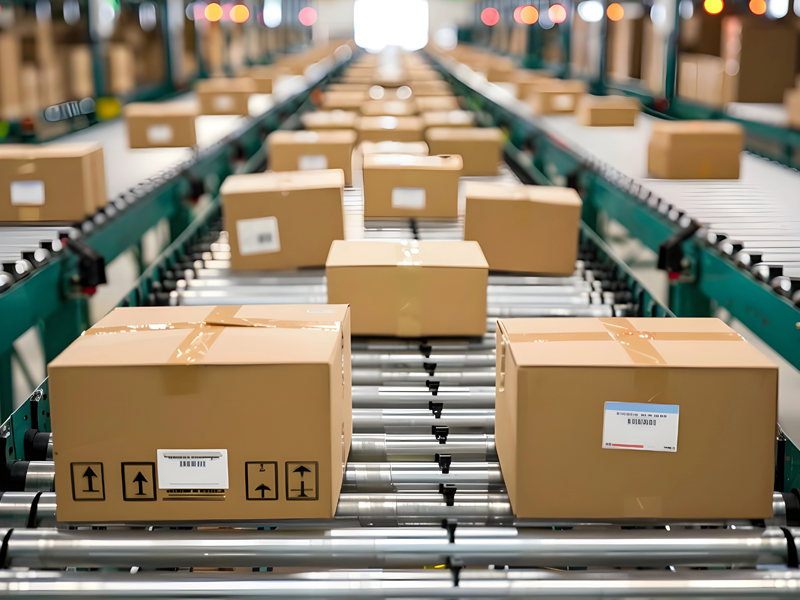
Corrugated packaging is entering a period defined less by volume growth and more by value capture. Regulation, retail consolidation, e-commerce and shifting consumer spending are all converging at once. We spoke with a Smithers analyst about the key trends shaping the sector through 2031 and what they mean for producers.
Q: The report describes six forces reshaping corrugated packaging as structural, not cyclical. What does that mean in practice?
The report identifies six factors converging – automation economics, sustainability regulation, demand-side changes, e-commerce growth, consolidation, and geopolitics – and each is reshaping the market on a permanent basis, not a temporary one. None will reverse or fade once conditions normalise. Together, they’re resetting how value is created across the industry, which means producers need to adapt their strategy rather than manage through a downturn.
Q: How wide is the cost gap between leading and lagging producers today?
Wider than most producers appreciate, and it’s still growing. Top-quartile operators are running 20–40% lower costs than bottom-quartile peers, and that gap is widening, not narrowing. Mega-plant automation is a big part of the story – a facility like Smurfit WestRock’s Pleasant Prairie site produces 3 billion square feet of board at roughly 60% of conventional labour input. Add in the mill cost advantage that integrated producers hold – €30–60 per tonne versus market buyers – and you can see why scale and integration are compounding rather than plateauing.
Q: What about the regulatory side? PPWR seems to be the dominant headline.
Yes, it is. The PPWR – Regulation EU 2025/40 – is due to enter application on 12 August 2026; it is arguably the most consequential piece of European packaging legislation in three decades. It brings mandatory recyclability grading, EPR eco-modulation fees, a 40% void-space limit, and PFAS bans – all of which touch nearly every corrugated format in some way. The upside for the industry is that corrugated starts from a position of strength: a roughly 90% OCC recycling rate gives it a structural advantage that a lot of competing substrates simply don’t have.
Q: Is demand actually growing? The report points to private-label growth and more cautious consumer spending.
Demand is more nuanced than ‘growing’ or ‘shrinking.’ Post-inflation, over 80% of US and European consumers now rate private-label products as equal or superior to branded goods, and volume growth has gone flat or negative across roughly 85% of consumer categories. Basically, we’re seeing less corrugated used per unit of CPG revenue, even where sales hold up.
Q: Where is the growth coming from?
E-commerce, unambiguously. It’s the highest-growth corrugated end-use globally, and that outperformance is expected to continue through 2031 as digital adoption deepens in emerging markets. China alone handled 174.5 billion express parcels in 2024, up 21% year-on-year, and India’s e-commerce corrugated demand is growing at 26.7% CAGR. Interestingly, the PPWR’s void-space mandate is accelerating right-sizing investment across fulfilment networks worldwide – so regulation and e-commerce growth are actually reinforcing each other.
Q: How extensive is consolidation across the corrugated market?
All the way down the tiers. Smurfit WestRock’s July 2024 merger and the International Paper/DS Smith combination in January 2025 created an unprecedented global duopoly at the top. Recent bolt-on deals include Mondi’s €634 million acquisition of Schumacher, along with Saica/Schumacher in Poland, Prinzhorn/Stora Enso in Germany, and Palm/Power Packaging in the Czech Republic. These deals show consolidation has reached every tier of the market, not just the majors.
Q: To what extent are geopolitical factors specifically affecting the packaging sector?
Between the Ukraine war, Middle East and Strait of Hormuz tensions, and US-China tariff escalation, this is what some are calling a BANI environment – brittle, anxious, nonlinear, incomprehensible. In plain terms: energy costs and trade flows are being reshaped in ways that are hard to predict or plan around. Smithers estimates tariff regimes alone could slow global packaging growth by up to 0.5 percentage points a year through 2030. The silver lining is that this shock is favouring integrated, locally anchored operators, since regionalisation is becoming a real strength, not just a safety net.
Q: How should producers be positioning themselves for the market through 2031?
Don’t wait for these forces to settle – they won’t. A producer that solves for automation but ignores PPWR compliance will find the cost advantage eaten up by eco-modulation fees. One that chases e-commerce growth without regional integration will be exposed the moment tariffs or energy costs shift again.
The producers pulling ahead are the ones treating automation, regulatory compliance, and regional integration as one connected strategy, not three separate problems. They’re investing in efficiency and compliance together, because top-quartile cost performance increasingly depends on how well a facility is positioned against the PPWR’s recyclability and void-space requirements.
Eric Chartrain has 38 years of experience in the pulp, paper, and fibre-based packaging industries, specialising in strategy, M&A, and business transformation. He has a strong track record of delivering top- and bottom-line growth through complex organisational change, while building collaborative, high-performing teams. With board-level experience and deep sector knowledge, Eric brings authoritative insight to the challenges and opportunities facing the global packaging sector.