

ISO 9001 Checklist
Download the Smithers ISO 9001 Certification Checklist to find out if your organization's quality management system is ready for an audit.
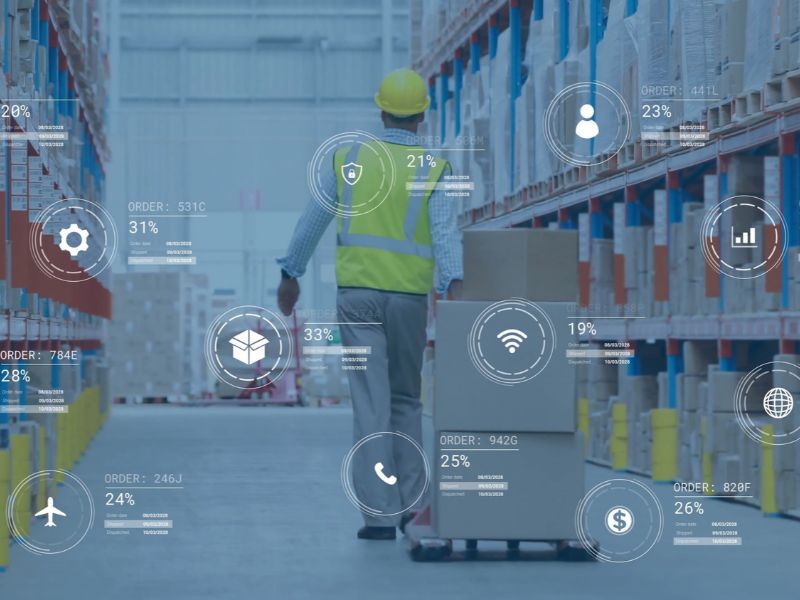
Quick Answer: ISO 9001 certification strengthens supply chain resilience by requiring disciplined process management, rigorous supplier controls, and thorough documentation. These requirements help organizations detect risks earlier, standardize supplier evaluation, and maintain continuity when disruptions occur. As global disruption events rise, ISO 9001 certification gives organizations a structured framework for building more resilient, predictable supply chains.
Global supply chains are under more strain than they've faced in years. According to Achilles' 2025 supply chain risk data, potential business disruption alerts increased by approximately 33%, climbing from roughly 44,000 in 2024 to 59,000 in 2025, driven largely by geopolitical instability and climate-related hazards. For organizations dependent on external suppliers and multi-tier logistics networks, this volatility makes resilience a strategic priority rather than an operational afterthought.
ISO 9001 certification, the world's most widely adopted quality management standard, offers organizations a proven framework for managing this uncertainty. With more than 837,000 active ISO 9001:2015 certificates issued worldwide as of the latest ISO Survey, the standard has become a global benchmark for operational discipline. While ISO 9001 certification is best known for improving quality management, its requirements around process control, supplier oversight, and documentation also directly reinforce supply chain resilience.
This article breaks down exactly how ISO 9001 certification supports supply chain stability, and why organizations preparing for the upcoming ISO 9001:2026 revision should pay close attention to these areas now.
ISO 9001 certification requires organizations to define, monitor, and continually improve their core operational processes. This structured approach to process management reduces the likelihood that a single point of failure disrupts the broader supply chain.
Under ISO 9001 certification, organizations must map out key processes, assign clear ownership, and establish measurable performance indicators. This visibility makes it easier to spot inefficiencies or bottlenecks before they cascade into larger disruptions. The standard's emphasis on risk-based thinking also pushes organizations to proactively identify vulnerabilities in their operations, rather than reacting only after a failure occurs.
Internal audits, a mandatory component of ISO 9001 certification, further reinforce this discipline. Regular audits create a feedback loop that catches process drift early, allowing corrective action before small issues become costly disruptions. Achilles' 2025 data supports this connection, noting that improvements in operational risk scores were driven by "stronger quality and health and safety policies" and "broader adoption of recognized certifications" across supplier bases.
Supplier reliability is often the weakest link in supply chain resilience, and ISO 9001 certification addresses this directly. Clause 8.4 of the standard, which governs the control of externally provided processes, products, and services, requires organizations to evaluate, monitor, and re-evaluate suppliers based on defined criteria.
This means ISO 9001-certified organizations can't simply select suppliers on cost alone. They must establish criteria for supplier selection, track supplier performance over time, and take corrective action when a supplier fails to meet quality or delivery expectations. This ongoing oversight reduces the risk of relying on unreliable or non-compliant partners, which is especially valuable as supply chains grow more complex and geographically dispersed.
Looking ahead, the upcoming ISO 9001:2026 revision is expected to place even greater emphasis on this area. As outlined by Wilkshire Consulting, the revision is expected to "strengthen focus on external providers, continuity planning, and resilience strategies" in direct response to recent global supply chain disruptions. Organizations already building strong supplier control practices under ISO 9001:2015 will be better positioned for this transition.
Documentation might not be the most exciting part of ISO 9001 certification, but it's one of the most important for resilience. When a disruption occurs, whether it's a supplier failure, a logistics delay, or a quality issue, documented systems allow an organization to respond quickly and consistently rather than improvising under pressure.
ISO 9001 certification requires organizations to maintain documented information covering key processes, quality objectives, and corrective actions. This creates an institutional memory that doesn't disappear when key employees leave or when a crisis demands a fast response. Teams can reference established procedures instead of rebuilding processes from scratch, which shortens recovery time and reduces the chance of repeating past mistakes.
Documentation also supports traceability. If a defective component or late shipment traces back to a specific supplier or process step, documented records make it possible to pinpoint the root cause and implement a fix. This traceability is particularly valuable in industries with complex, multi-tier supply chains, where a single disruption can otherwise be difficult to diagnose.
As global supply chains become more interconnected, the risks tied to any single point of failure grow too. ISO 9001 certification doesn't eliminate disruption, no framework can, but it gives organizations the structure to anticipate risk, respond faster, and recover more predictably.
This is particularly relevant given the trends shaping the standard's next revision. The ISO 9001:2026 update, expected for publication in October 2026 with a three-year transition period, is set to reflect "greater reliance on complex global supply chains" and "more focus on organizational resilience," according to Wilkshire Consulting. Organizations that treat ISO 9001 certification as a living framework, rather than a one-time compliance milestone, will be better equipped to adapt as these requirements evolve.
Supply chain disruption is no longer an occasional risk to plan around; it's a persistent operating condition. ISO 9001 certification gives organizations a structured way to respond: disciplined process management to catch issues early, rigorous supplier controls to reduce third-party risk, and thorough documentation to enable fast, consistent recovery.
Organizations that already hold ISO 9001 certification should use this moment to assess how well their current systems address these three areas, particularly with the ISO 9001:2026 revision on the horizon. Those that haven't yet pursued certification should consider it a strategic investment in operational stability, not just a quality management exercise.
Contact us today to learn more about how ISO 9001 certification can strengthen your organization's operations or to get started on the path to achieving it.
No certification can fully eliminate disruption risk. ISO 9001 certification reduces the likelihood and impact of disruptions by requiring stronger process oversight, supplier evaluation, and documentation, but organizations still need broader risk management strategies to handle events like geopolitical shifts or natural disasters.
ISO 9001 certification focuses on quality management systems broadly, with supply chain-related requirements embedded within clauses like 8.4 (control of externally provided processes). Dedicated supply chain risk frameworks, by contrast, focus specifically on continuity planning and third-party risk monitoring. Many organizations use ISO 9001 certification alongside these frameworks for more comprehensive coverage.
Timelines vary based on an organization's existing processes and documentation maturity, but most organizations spend several months to a year preparing before a certification audit. Organizations with fewer established processes should expect a longer preparation timeline.
Yes, particularly for businesses looking to formalize supplier relationships and reduce operational risk. Smaller businesses often benefit from the structure ISO 9001 certification provides, even if their supply chains are less complex than larger enterprises.
Organizations should begin reviewing their supplier risk management practices, continuity planning, and documentation now. Since the revision is expected to strengthen supply chain resilience requirements specifically, early preparation reduces the pressure of the three-year transition window.