
From Discovery Through Clinical Development: Why Continuity Matters in Bioanalytical Partnerships
Drug development is rarely a straight path. Scientific understanding evolves, assays become more sophisticated, regulatory expectations increase, and study complexity expands dramatically as promising candidates move from discovery into preclinical and clinical development.
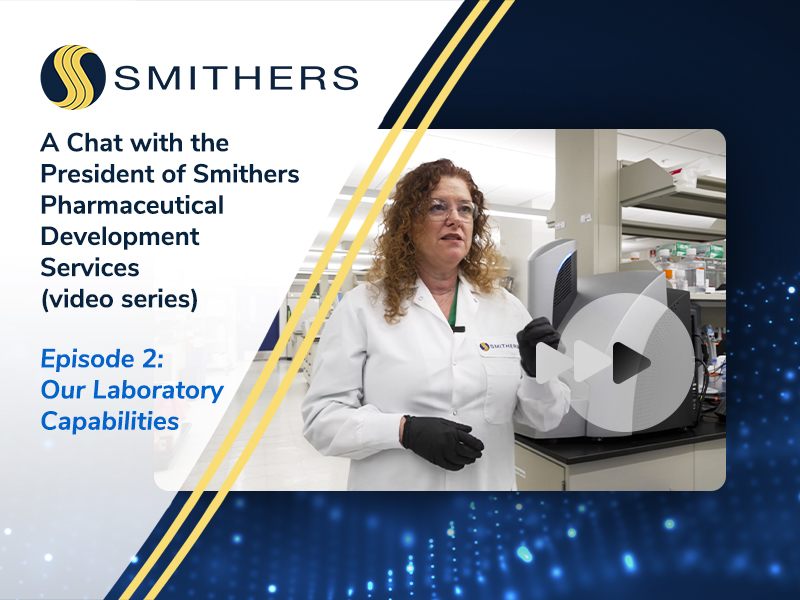
At Smithers Pharmaceutical Development Services, our laboratories are designed to support programs across the entire development lifecycle. Rather than transitioning between multiple analytical partners as development progresses, sponsors can work with a single scientific team that understands their molecule, their assay strategy, and their long-term objectives from the earliest stages of research through regulatory submission.
That continuity creates efficiencies that extend well beyond convenience. It helps preserve scientific knowledge, minimizes technology transfer risk, streamlines communication, and provides sponsors with confidence that their analytical strategy continues to evolve alongside their development program.
Building Strong Assays from the Beginning
Every successful bioanalytical program begins with a reliable analytical method. During discovery, researchers need assays capable of generating meaningful data that guide critical decisions about candidate selection, mechanism of action, pharmacokinetics, pharmacodynamics, biomarkers, and early safety. Those initial methods often serve as the foundation for everything that follows.
As development advances, however, the expectations placed on those assays increase substantially. Methods that perform well during exploratory research frequently require optimization, refinement, and validation before they are suitable for regulated preclinical studies or clinical trial support. Smithers supports this entire progression. Our scientific teams work with sponsors during early assay development and continue refining those methods as programs mature, helping ensure they remain scientifically robust, reproducible, and appropriate for each stage of development.
Supporting the Transition into GLP Studies
Moving into regulated preclinical research introduces new levels of documentation, validation, quality systems, and regulatory oversight. Bioanalytical methods must not only generate reliable data, but also withstand the scrutiny expected under Good Laboratory Practice (GLP).
This transition is often where maintaining scientific continuity becomes especially valuable.
Rather than introducing a new laboratory that must learn the assay from the beginning, Smithers can continue advancing methods developed during discovery into fully validated GLP assays. Because the same organization has participated throughout method evolution, valuable scientific knowledge is retained instead of being recreated through repeated technology transfers. For sponsors, that can reduce delays, minimize risk, and create a smoother path toward clinical development.
Scaling for Clinical Development
As compounds enter human studies, bioanalytical demands expand significantly.
Clinical programs require not only scientifically rigorous analytical methods but also operational infrastructure capable of handling increasing sample volumes while maintaining data quality, chain of custody, and regulatory compliance.
Whether supporting Phase I studies with relatively modest sample numbers or large multinational Phase III programs involving thousands of patient specimens, sponsors need confidence that their laboratory partner can scale without sacrificing quality.
Smithers has built that infrastructure. Our laboratories, sample management capabilities, and experienced operational teams are equipped to process thousands of clinical samples each week while maintaining the consistency, documentation, and turnaround times that modern clinical development requires.
As study complexity increases, sponsors benefit from working with an organization that already understands both the analytical methods and the broader goals of the program.
More Than Sample Analysis
Effective programs require coordinated sample logistics, storage, tracking, quality oversight, regulatory documentation, data integrity, scientific interpretation, and close communication between laboratory teams and sponsors. These interconnected capabilities become increasingly important as development progresses through multiple studies spanning several years.
Because Smithers offers integrated laboratory and sample management services under one organization, sponsors gain a coordinated partner capable of managing both the scientific and operational complexities of modern bioanalytical development.
A Strategic Partner Throughout Development
Many organizations provide excellent services for a single phase of drug development. Few are positioned to support the complete journey.
At Smithers Pharmaceutical Development Services, our goal is to become an extension of our clients' scientific teams. From early assay development during discovery through GLP validation, clinical sample analysis, regulatory support, and ultimately submission, we work alongside sponsors as programs evolve.
This long-term partnership approach allows scientific expertise, institutional knowledge, and operational efficiencies to accumulate throughout development rather than being lost at each transition point.
Confidence from Discovery to Submission
Every development milestone builds upon the work that came before it. Strong bioanalytical science is not created independently at each phase. It evolves through careful refinement, collaboration, and experience.
Choosing a laboratory partner capable of supporting that entire lifecycle helps reduce complexity while creating greater consistency across discovery research, preclinical development, clinical trials, and regulatory submission.
At Smithers Pharmaceutical Development Services, we believe the strongest partnerships are built on continuity. By supporting bioanalytical programs from the earliest stages of discovery through clinical development and beyond, we help sponsors generate the high-quality data they need to make informed decisions, advance promising therapies, and ultimately bring new medicines to patients with confidence.