
Creep Testing
Our expert team at Smithers has extensive experience in assessing the creep properties of plastics and rubber, delivering the insights needed to support durable, reliable product design.
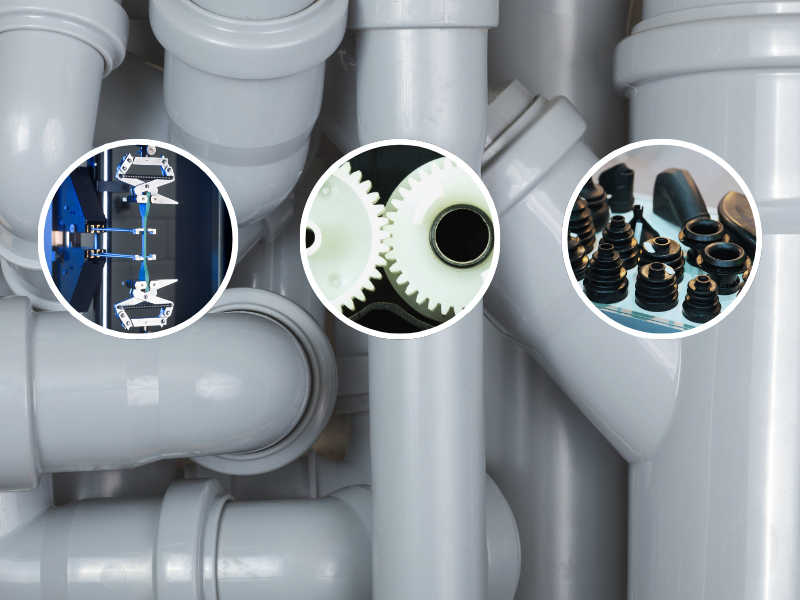
Creep testing is an essential tool for predicting the long-term durability of polymers. This FAQ answers common questions about creep, the gradual deformation of polymers over time. From what causes plastics to deform, to how the environment accelerates creep, our experts explain the basics and why laboratory testing is essential.
For a deeper dive into testing methods and durability prediction, see our full Creep Testing Explained guide
Plastics and rubbers are viscoelastic materials, which means their properties depend on time, stress, and temperature. Even at stress levels well below yield strength, components can gradually deform - a phenomenon known as creep.
When load is applied, polymers show an immediate elastic response, followed by progressive permanent creep deformation. Over time, this deformation becomes cumulative, especially in demanding environments. Components may lose dimensional stability or eventually fail, even if they perform well in short-term tests.
Creep strain tests measure how a material deforms under constant stress over extended periods - sometimes thousands of hours. These measurements help predict service life and are often repeated at different stress levels or temperatures to model performance more accurately.
Temperature, load, and chemical exposure all affect creep rates. For example, elevated heat accelerates deformation, while certain chemicals (environmental stress cracking agents) can trigger premature failure at stress levels that would normally be safe.
Creep continues until the material eventually fails - a process known as creep rupture. By generating rupture data in laboratory conditions, engineers can define long-term stress limits and understand how a polymer will behave over its service life.
Creep testing allows designers and manufacturers to:
By replicating service environments in the lab, testing provides confidence in durability before products reach market.
This FAQ is a quick overview. For a deeper dive into methods, applications, and the business benefits of creep testing, download our expert guide:
Creep Testing Explained: Predicting Long-Term Performance in Polymers
Or, contact our experts to discuss how creep testing or fatigue testing can support your project.