High-Speed Uniformity Testing
Our tire testing experts can provide state-of-the-art high-speed uniformity and cleat testing to measure and evaluate your tire performance as it relates to noise, vibration, and harshness (NVH).
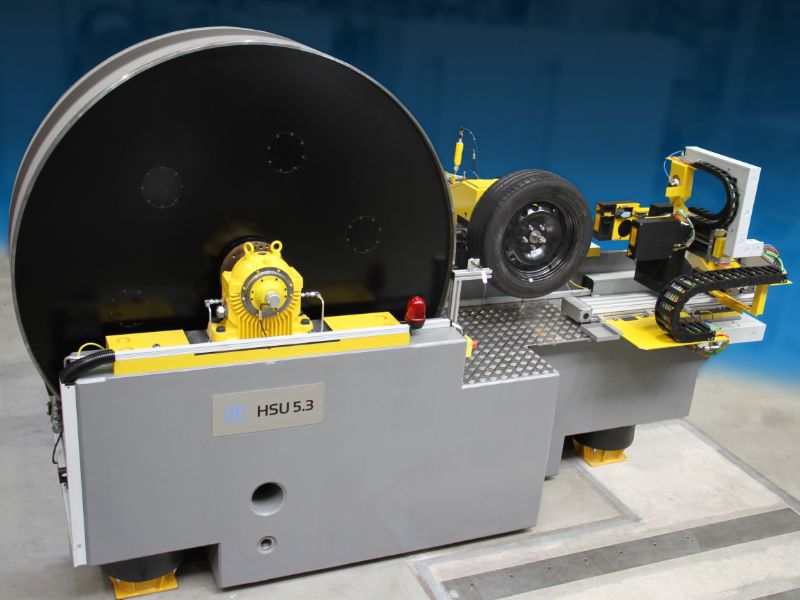
No tire is perfectly uniform. Small variations in construction, materials, and curing mean every tire pushes back against the road a little differently as it rotates. At parking lot speeds those variations may go unnoticed, but at highway speed they can show up as steering wheel shake, seat vibration, or a vehicle that drifts to one side. For tire engineers and vehicle OEMs, the challenge is measuring those forces under conditions close enough to real driving that the data reflects what a driver will actually feel.
In this installment of the Behind the Test series, we head to the Smithers Tire Testing Lab in Ravenna, Ohio. Cliff Hodges walks through how high speed uniformity testing works, the force measurements engineers rely on, and how our team uses that data to trace vibration and pull back to their source.
Uniformity is a core part of how OEMs evaluate tires for ride quality and NVH performance, and many set their own limits for force variation and its harmonics. Low speed uniformity measurement is well suited to screening tires on the production line, but some force variations grow with speed, so a tire that passes at low speed may still contribute to vibration at highway speed. As quieter vehicle cabins, including those in electric vehicles, make smaller disturbances easier to notice, high speed data can help teams identify issues earlier in development and compare designs on a consistent basis across builds and suppliers.
To get started with your next uniformity testing program, reach out to our experts to scope your testing.